Posts

Showing posts with the label Simvastatin

Choose your Statin with Care in FXS, NF1 and idiopathic Autism

Image
There are several old posts in this blog about the potential to treat some autism using statins; this has nothing to do with their ability to lower cholesterol.  Statins are broadly anti-inflammatory but certain statins do some other particularly clever things. This led me to use Atorvastatin and Fragile-X researchers to use Lovastatin. Fragile X is suggested by an elongated face and big/protruding ears;  other features include MR/ID and autism. I was recently forwarded a Scottish study showing why Simvastatin does not work in Fragile X syndrome, but Lovastatin does. Fragile X mental retardation protein ( FMR1 ) acts to regulate translation of specific mRNAs through its binding of eIF4E (see chart below). In people with Fragile X, they lack the FMR1 protein. Boys are worse affected than girls, because females have a second X chromosome and so a "spare" copy of the gene.           Simvastatin does not reduce ERK1/2 or mTORC1 activation in the Fmr1-/y hi...

Statins, SLOS and Hypocholesteraemia – Going Nowhere Fast

Image
Today’s post is about cholesterol, statins and autism. There is a well-documented condition associated with autism called SLOS (Smith-Lemli-Opitz Syndrome). It is caused by mutations in the DHCR7 gene encoding the enzyme that catalyzes the final step in cholesterol biosynthesis. Toe syndactyly (webbed toes), one symptom of SLOS Reduced activity of the enzyme 7DHCR typically leads to low levels of cholesterol, but markedly increased levels of precursor 7DHC (and its isomer, 8DHC) in blood and tissues. Typical SLOS manifestations include intellectual disability, growth retardation, minor craniofacial anomalies, microcephaly and 2-3 toe syndactyly (webbed toes). SLOS is rare, but some cases do get missed because you can have a DHCR7 mutation and have normal levels of cholesterol and have normal cognitive function. Cholesterol and the blood brain barrier (BBB) You do have a lot of cholesterol in your brain, but it does not cross the blood brain barrier (BBB), it was made in the brain. ...

More Support for the use of Statins in some Autism

Image
Monty, aged 12 with ASD, has been taking Atorvastatin for two years, with a clear cognitive improvement from day one.    This improvement is lost when this therapy is interrupted. There are several posts in this blog giving the scientific basis why statins might be beneficial in some autism, these included the genes/proteins RAS, PTEN and BCL2.  In addition, statins possess potent anti-inflammatory properties. Following a flood of visits to this blog to read about statins and autism, I did a quick check and in recent weeks at least three papers have been published suggesting the potential for statins to improve some autism. I include the word “some” because with 800 currently identified autism genes, and I expect eventually it will be thousands, what works for one person’s “autism” may not help the next person’s “autism” and might even make it worse. The first paper is the one getting the media coverage, it is from the University of Edinburgh, plus Mark Bear et al from MI...

RAS signaling, Autism, Cancer and Gingerols

Image
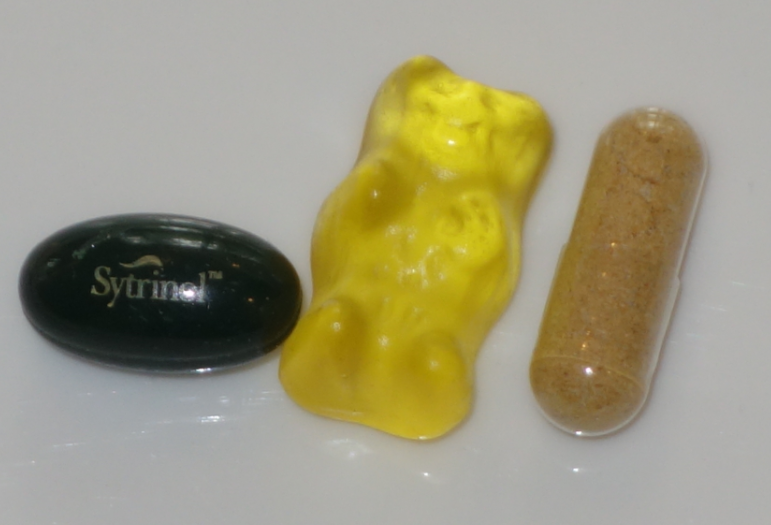
Sytrinol (Tangeretin), sacrificial Gummy Bear and Gingerol Today’s post follows on from an earlier one that introduced the term RASopathy.  A RASopathy is a disease characterized by over-activation of the RAS protein. RASopathies are of interest because if you have one, you are highly likely to also have autism. RAS dysfunction is also present in many types of cancer and there are existing drugs to inhibit RAS signaling.  It has been claimed that:- "If RAS proves to be a key player in autism …  it might suggest new treatments for autism, as many cancer drugs inhibit RAS signaling." Regular readers of the Simons Foundation autism blog may have read the following: RAS pathway, a potentially unifying theory of autism     Cancer pathway connects autism to set of rare disorders If RAS proves to be a key player in autism, she says, it might suggest new treatments for autism, as many cancer drugs inhibit RAS signaling. RAS-based interventions My Polypill already has o...