Posts

Showing posts with the label parasite

Viruses, Bacteria, Fungi, Parasites and Altered Gene Expression, Relevant to Autism

Image
Today’s post started life as a review of how some viruses affect gene expression and may help cause, or just trigger flare-ups in, some neurological disorders ranging from autism to MS (multiple sclerosis).   Some people with autism are treated with anti-viral drugs and, anecdotally, some do respond well.   This is not yet an area with hard facts and definitive clinical trials.    It is actually better to first take a few steps back and consider how all microorganisms can play a role in human health by modifying the gene expression of the host (which is you).   There are four broad categories of microorganism. Each type of microorganism can be countered by a matching category of pharmaceutical. ·         Antibacterials/antibiotics for bacteria ·         Antifungals to kill or prevent further growth of fungi ·         Antivirals to minimize (but often not erad...
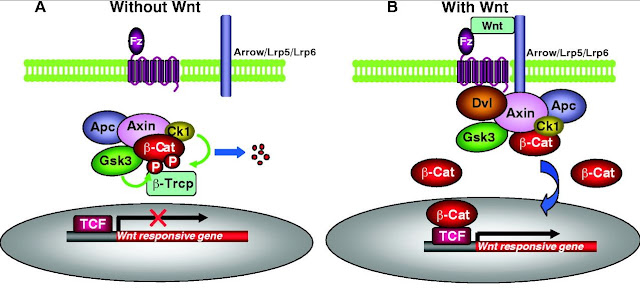
Modulating Wnt Signaling in Autism and Cancer

Image
Source: LDL receptor-related proteins 5 and 6 in Wnt/β-catenin signaling: Arrows point the way In earlier posts I have covered various signaling pathways such as Wnt, mTOR and the unusually sounding Hedgehog. You can go into huge detail if you want to understand these pathways, or just take a more superficial view. In most cases, things only start to go wrong if you are hypo/hyper (too little/too much) in these pathways. We saw with mTOR that most people with autism are likely to have too much activity and so might benefit from mTOR inhibition, but a minority will have the opposite status and stand to benefit from more mTOR activity. When it comes to Wnt signaling the research suggests the same situation. Wnt signaling is likely to be aberrant, but both extremes exist. Wnt signaling networks in autism spectrum disorder and intellectual disability Given the large volume of genetic data, analyzing each gene on its own is not a feasible approach and will take years to complete, let alone ...

The Role of Microglia in the Puzzle of Neuro-inflammation in Autism

Image
Regular readers of this and similar blogs will have noticed that the human body functions in quite irrational ways.  We know why this is; we are the product of a very slow evolutionary process, rather than being a clean-sheet design like your smart phone or iPad. As a result, nothing is ever quite as simple as it seems and at times the cleverer you are, the less likely you are to find a medical therapy effective in humans. Such is the case with autism, inflammation and microglia. It might seem that you can track back inflammation in autism to its “root cause”, which could appear to be those immune cells in the brain, called microglia.  We know they are “activated” in autism and we know that autism is typified by an “over-activated” immune response. Working with the assumption that autism is a brain dysfunction, you would assume that the effective therapy should be inside the so-called blood brain barrier (BBB). You would then just look for a potent drug that could “stabilize” ...